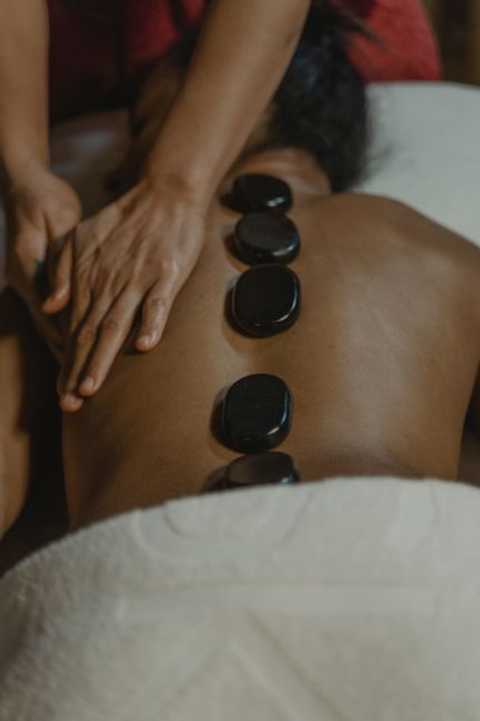
What happens during treatment
Your session begins with a brief intake to note areas of tension, comfort preferences, and any medical considerations. Heated stones are used as a warm tool to rub away tension across muscles; the therapist applies firm, steady strokes with the stones, monitoring temperature and client feedback throughout the treatment to keep the experience comfortable and effective.
Over 120 MINUTES the therapist can spend extended time on tight areas, alternating warmed stones with gliding handwork as needed. That extended duration lets the therapist move more slowly, revisit areas for deeper attention, and allow heat to change tissue temperature gradually, while remaining responsive to your comfort and any local needs noted during intake.
Comfort, temperature, and pacing
Heat level and pressure are adjustable — you control both. Therapists check temperature at the start and frequently during the session, and will modify strokes, stone placement, or pause as you request. Draping and modesty are maintained; communication about sensitivity helps the therapist tailor the pace and focus during the full 120 MINUTES.
Local seasonality in Penfield can shape expectations: warm stone work is often especially appealing in colder months, and suburban clients frequently schedule longer appointments around family or commuter routines. We accommodate timing needs and recommend arriving slightly early to settle in and discuss any changes since booking.
Who typically chooses this
Clients from Penfield, Fairport, Webster, East Rochester, Rochester and Perinton often book longer hot stone sessions when they want extended, heat-focused attention. Busy families, professionals, and older adults who balance commuting and local activities find a 120-minute appointment useful for deliberate relaxation and time to address multiple tension areas during a single visit.
Tell your therapist about pregnancy, recent surgery, skin sensitivity, or circulatory and neurological conditions before treatment. The therapist will adjust technique, temperature, or recommend physician clearance when appropriate. That conversation helps ensure the session is adapted to your health context rather than relying on a one-size-fits-all approach.